



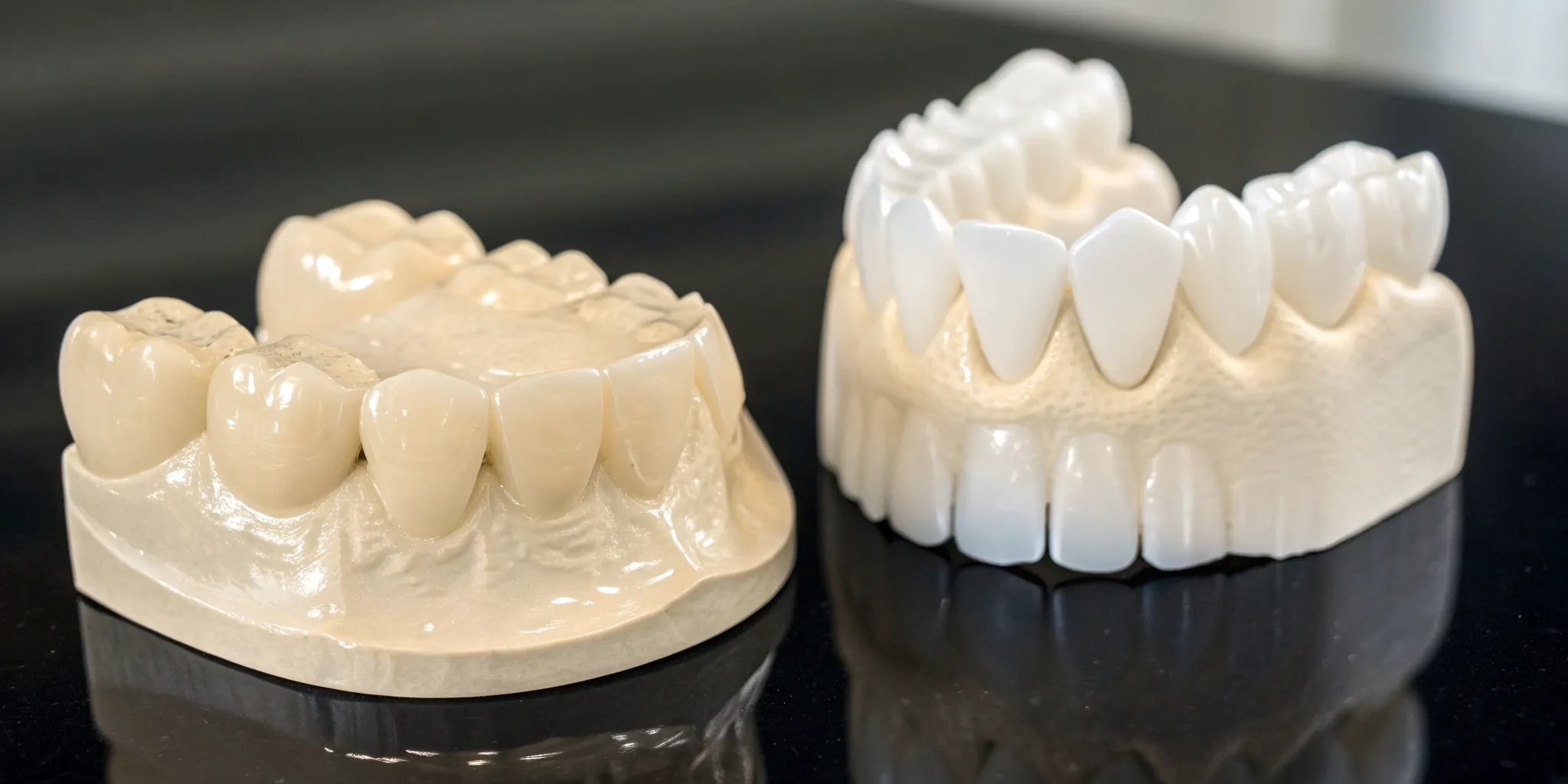
A beautiful smile is a powerful thing, and veneers are one of the best ways to achieve the look you’ve always wanted. As you start your research, you’ll quickly find that the main choice comes down to porcelain veneers vs composite veneers. While both can give you fantastic results, they are fundamentally different. Porcelain is a premium ceramic crafted in a lab for a perfect, long-lasting fit, while composite is a resin material sculpted directly onto your teeth in a single visit. Understanding these distinctions in material, process, and durability is the key to choosing the right path for your smile makeover.
Key Takeaways
- Match the Material to Your Goals: Choose porcelain for a durable, stain-resistant, and highly natural-looking smile built for the long haul. Opt for composite if you need a quick, budget-friendly, and less invasive solution for cosmetic improvements.
- Balance Upfront Cost with Long-Term Value: Porcelain requires a larger initial investment but can last 15 years or more, while composite is more affordable upfront but will likely need replacement or repairs within 5 to 7 years.
- An Expert Consultation is Key: The best choice is unique to your smile. A conversation with your dentist is the most effective way to review your specific needs, compare the benefits of each material, and create a personalized treatment plan.
Porcelain vs. Composite: What’s the Difference?
If you’re looking to enhance your smile, you’ve likely come across veneers as a popular option. But the conversation doesn’t stop there. The next step is deciding between the two main types: porcelain and composite. Both can give you a beautiful, confident smile, but they differ in material, application process, longevity, and cost. Understanding these key distinctions is the first step toward figuring out which path is the right one for you and your smile goals.
What Are Porcelain Veneers?
Think of porcelain veneers as super-thin, custom-made shells crafted from a durable ceramic material. Each one is meticulously designed in a lab to fit perfectly over the front surface of your tooth. They are the gold standard for a reason: their translucent quality mimics the look of natural tooth enamel, and they are incredibly resilient. Porcelain is fantastic at resisting stains from coffee, tea, or red wine, keeping your smile bright for years. With proper care, these veneers can last anywhere from 10 to 20 years, making them a long-term investment in your smile as part of a comprehensive cosmetic dentistry plan.
What Are Composite Veneers?
Composite veneers are made from a tooth-colored resin—the same material used for dental fillings. Unlike their porcelain counterparts, composite veneers are sculpted directly onto your teeth by your dentist in a single visit. This makes the process much faster and generally more affordable. Because the material is applied right to the tooth, it often requires less enamel removal, making it a less invasive option. The trade-off is in their longevity and durability; composite veneers typically last about 5 to 7 years and are more prone to staining over time. They are an excellent choice for fixing smaller cosmetic issues like chips or gaps.
Are Veneers a Good Fit for You?
Choosing between porcelain and composite really comes down to your personal priorities. What are your smile goals? What’s your budget? And how long do you want the results to last? If you’re looking for a complete, long-lasting smile makeover and want the most natural-looking, durable option, porcelain veneers are likely the best fit. However, if you’re on a tighter budget or need to address minor imperfections quickly, composite veneers offer a fantastic and effective solution. The best way to make a final decision is to consult with your dentist, who can assess your teeth and help you weigh the pros and cons based on your unique needs.
A Head-to-Head Comparison: Porcelain vs. Composite
When you’re thinking about getting veneers, the two main choices you’ll come across are porcelain and composite. Both can completely transform your smile, but they have some key differences in how they’re made, how they feel, and how they’re applied. Understanding these distinctions is the first step in figuring out which option aligns with your goals, budget, and lifestyle. Think of it as choosing between two great paths to the same beautiful destination. Let’s break down what sets them apart so you can feel confident in your decision.
Materials and Strength
The biggest difference between the two types of veneers comes down to the material. Porcelain veneers are thin shells of medical-grade ceramic that are custom-crafted in a dental lab. This material is incredibly strong and durable, closely mimicking the strength of natural tooth enamel. Because of this, porcelain veneers are highly resistant to stains and chipping, typically lasting anywhere from 10 to 20 years with proper care.
Composite veneers, on the other hand, are made from a tooth-colored resin that your dentist sculpts directly onto your teeth. While this material is also strong, it’s not as durable as porcelain. Composite veneers usually last between 4 and 8 years and are more susceptible to staining over time. They offer a fantastic, more budget-friendly path to a new smile, but they do require a bit more maintenance.
The Application Process and Timeline
Your schedule can play a big role in which veneer is right for you. Getting composite veneers is a relatively quick process, often completed in a single appointment. Your dentist applies the resin material directly to your teeth, then shapes and polishes it to perfection right then and there. It’s a straightforward procedure that delivers immediate results.
Porcelain veneers involve a more detailed process that usually takes at least two visits. During the first appointment, your dentist will prepare your teeth and take an impression, which is sent to a dental lab where your custom veneers are made. You’ll wear temporary veneers while you wait. A few weeks later, you’ll return to have your permanent, perfectly fitted veneers bonded to your teeth by our team of expert doctors.
Achieving a Natural-Looking Smile
Both options can give you a stunning smile, but they achieve their look in slightly different ways. Porcelain is fantastic at mimicking the natural appearance of tooth enamel. It has a translucent quality that allows it to catch and reflect light just like a real tooth, which creates a very lifelike, vibrant result. It’s why porcelain is often the top choice for a complete smile makeover in cosmetic dentistry.
Composite veneers also produce a beautiful, natural-looking finish. Your dentist can carefully match the resin shade to your surrounding teeth for a seamless blend. However, composite material doesn’t have the same light-reflecting properties as porcelain, so it may not achieve the same level of depth and translucency. It’s an excellent choice for fixing smaller imperfections like chips or gaps.
How Much Tooth Prep Is Needed?
The amount of preparation your natural teeth need is another important factor. To place porcelain veneers, your dentist will need to remove a very thin layer of enamel from the front of your teeth. This step is necessary to ensure the veneers fit perfectly and don’t look bulky. Because enamel doesn’t grow back, this makes the process irreversible.
Composite veneers are a less invasive option. In many cases, they require very little, if any, removal of your natural tooth structure. The resin is simply bonded to the existing surface of your tooth. This makes the procedure not only more conservative but also potentially reversible down the road if you ever decide to remove them. This approach aligns with a commitment to your overall dental health.
Which Veneers Have a Longer Lifespan?
When you’re investing in your smile, you want it to last. Longevity is one of the biggest differentiators between porcelain and composite veneers, and understanding the lifespan of each can help you make a confident choice. While both are durable options, one clearly outlasts the other, but that doesn’t automatically make it the better choice for everyone. It’s all about balancing durability with other factors like repairability and your personal habits. Let’s look at how long you can expect each type of veneer to last and what you can do to protect your investment.
How Long Porcelain Veneers Last
Porcelain veneers are the long-distance runners of cosmetic dentistry. Thanks to the strength of the ceramic material, they are incredibly durable and can last anywhere from 10 to 20 years with proper care. This impressive lifespan is because porcelain is highly resistant to chipping and staining, mimicking the resilience of natural tooth enamel. To get the most out of your porcelain veneers, you’ll need to treat them like your natural teeth—think consistent brushing, flossing, and regular dental check-ups. Avoiding habits like biting your nails or using your teeth to open packages will also go a long way in helping them reach that 20-year mark.
The Durability of Composite Veneers
Composite veneers offer a beautiful smile transformation with a shorter, but still significant, lifespan. Generally, you can expect composite veneers to last about 5 to 7 years. With excellent care and maintenance, some people can even extend their lifespan up to 10 years. The composite resin material isn’t as strong as porcelain, making it more susceptible to wear, chipping, and staining over time. However, this shorter duration is often balanced by a lower initial cost and a less invasive application process, making them a fantastic option for many people looking for a smile upgrade without the long-term commitment of porcelain.
Factors That Impact Your Veneers’ Longevity
Regardless of which material you choose, how you care for your veneers will directly affect how long they last. Your daily habits play a huge role. Things like teeth grinding (bruxism), chewing on ice, or biting hard objects can damage both porcelain and composite veneers. Your diet matters, too; while porcelain is quite stain-resistant, composite can stain over time from coffee, tea, or red wine. The foundation of longevity, however, is excellent oral hygiene. A consistent routine of brushing, flossing, and attending regular general dentistry appointments for cleanings and check-ups is the best way to protect your investment and keep your smile looking its best.
Comparing Repairs and Maintenance
Life happens, and sometimes a veneer might chip or crack. This is where the differences in repairability become clear. Porcelain veneers are incredibly strong, but if one does break, the repair process can be complex. Usually, the entire veneer needs to be replaced, which involves a new impression and a wait for the dental lab to create a replacement. In contrast, composite veneers are much easier to repair. If a composite veneer chips, your dentist can often fix it directly in your mouth in a single appointment by bonding new resin to the damaged area. This convenience is a significant advantage for the composite option.
Weighing the Pros and Cons of Each Type
Choosing between porcelain and composite veneers comes down to your personal goals, budget, and lifestyle. Both options can dramatically improve your smile, but they have distinct differences in durability, appearance, and cost. Understanding these trade-offs is the first step toward making a decision you’ll be happy with for years to come. Let’s break down the key advantages and disadvantages of each type so you can see which one aligns best with what you’re looking for.
Advantages and Disadvantages of Porcelain
Porcelain veneers are the gold standard for a reason. Their biggest advantage is their stunning, natural appearance. The ceramic material reflects light just like natural tooth enamel, and they are highly resistant to staining and wear. This makes them an incredibly durable, long-lasting option for a complete smile makeover. The main drawback, however, is the cost. Porcelain veneers are a bigger upfront investment than their composite counterparts. The process also requires removing a thin layer of enamel, making it an irreversible treatment.
Benefits and Drawbacks of Composite
If you’re looking for a more budget-friendly or less permanent option, composite veneers are an excellent choice. They are made from a tooth-colored resin that your dentist sculpts directly onto your teeth, often in a single visit. This makes the process faster and less invasive. Plus, if a composite veneer chips, it’s typically an easy fix. While they can last for 5 to 7 years with good care, composite veneers aren’t as durable or stain-resistant as porcelain, and may not achieve the same level of lifelike translucency.
Stain Resistance and Upkeep
When it comes to keeping your smile bright, porcelain has a clear edge. The non-porous ceramic material is highly resistant to stains from coffee, tea, and red wine. You can essentially care for them just as you would your natural teeth. On the other hand, composite veneers can stain over time, much like your real teeth. This means you might need to be more mindful of certain foods and drinks or have them polished periodically to maintain their color. Following proper post-care guidelines is crucial for extending the life of either type.
Common Myths About Veneers
There are quite a few misconceptions about veneers floating around. One common myth is that they look bulky or fake, but modern cosmetic dentistry techniques ensure a seamless, natural fit. Another is that the process is extremely painful or invasive. While porcelain veneers do require some tooth preparation, it’s a minimally invasive procedure designed to preserve as much of your natural tooth as possible. It’s important to remember that veneers aren’t a one-size-fits-all solution; the best choice depends entirely on your unique smile and goals.
Breaking Down the Cost of Veneers
Let’s talk about one of the most important factors in any dental decision: the cost. When you’re considering veneers, the price tag can vary quite a bit depending on the material you choose, where you live, and the complexity of your case. Understanding the financial side of things will help you make a confident choice that fits your budget and your smile goals. Think of it not just as a cost, but as an investment in yourself. We’ll break down the typical expenses for both porcelain and composite veneers, look at their long-term value, and discuss how insurance and financing play a role. This way, you can have a clear picture of the investment before you move forward.
The Price of Porcelain Veneers
Porcelain veneers are the premium option, and their price reflects the high-quality materials and artistry involved. You can generally expect the cost to range from $925 to $2,500 per tooth. This higher price point is due to a few factors. First, porcelain is an incredibly durable and stain-resistant material that closely mimics the look of natural tooth enamel. Second, each veneer is custom-crafted in a dental laboratory by a skilled technician, a process that takes time and precision. This ensures a perfect fit and a beautiful, seamless result as part of your overall cosmetic dentistry plan. The investment covers the material, the lab work, and the expertise required to place them perfectly.
What to Expect for Composite Veneer Costs
If you’re looking for a more budget-friendly path to a new smile, composite veneers are an excellent alternative. The cost for composite veneers is significantly lower, typically falling between $250 and $1,500 per tooth. The main reason for this price difference is the application process. Unlike porcelain, composite veneers are sculpted directly onto your teeth by your dentist in a single appointment. This eliminates the need for a dental lab and the associated fees. While they are more affordable upfront, it’s a great way to achieve a dramatic smile transformation without the higher initial investment of porcelain.
Long-Term Value and Replacement Expenses
When you’re weighing the costs, it’s helpful to think about the long-term value. Porcelain veneers, while more expensive initially, can last for 15 years or even longer with proper care, making them a durable, long-term solution. Composite veneers have a shorter lifespan, usually around 5 to 7 years, before they may need to be touched up or replaced. However, one advantage of composite is that if it chips, the repair is often simple and less expensive than repairing a porcelain veneer. Your decision may come down to whether you prefer a larger upfront investment for longevity or a lower initial cost with the expectation of future maintenance.
Understanding Insurance and Financing
A common question we hear is, “Will my insurance cover veneers?” In most cases, the answer is no. Because veneers are typically considered a cosmetic procedure, most dental insurance plans do not contribute to the cost. However, it’s always a good idea to check the specifics of your individual plan. If a tooth is cracked or damaged, some plans might cover a portion of a restorative treatment that happens to be a veneer. We can help you understand your benefits and explore other financing options to make your dream smile more accessible. Don’t let the initial cost deter you from exploring the possibilities.
How to Choose the Right Veneers for Your Smile
Making the final call between porcelain and composite veneers comes down to your personal smile goals, budget, and lifestyle. Both options can completely transform your teeth, but they get you there in slightly different ways. The best choice is the one that aligns with your priorities and gets you excited about your new smile. A great first step is having an open conversation with a dentist who specializes in cosmetic dentistry to map out a plan that makes sense for you.
Key Factors to Help You Decide
When weighing your options, consider appearance, durability, and cost. Porcelain veneers are celebrated for their lifelike look and superior strength. They are highly resistant to stains, but this premium quality comes with a higher price tag. On the other hand, composite veneers are a more budget-friendly choice that offers beautiful results. They are a fantastic way to fix cosmetic issues, though they may not last as long as porcelain and can be more prone to staining over time.
Questions to Ask Your Dentist
Your consultation is the perfect time to get clarity. A good cosmetic dentist will walk you through the best options for your specific teeth. Don’t hesitate to ask direct questions to feel confident in your decision. Consider asking which type they recommend for you, how they match the shade, and if you can see before-and-after photos of their work. Feeling comfortable with your dental team is key, so take the time to meet the doctors and find a provider you trust.
What to Expect During the Process
The timeline depends on the material you choose. Porcelain veneers typically require at least two visits: one for preparation and impressions, and a second to bond the final veneers. Composite veneers, however, can often be done in a single appointment. Your dentist applies the composite resin directly to your teeth and sculpts it into the desired shape right there in the chair, making it a much quicker transformation.
How to Care for Your New Smile
Keeping your new veneers looking great is straightforward. Treat them just like your natural teeth with consistent brushing twice a day and daily flossing. It’s also smart to avoid biting down on very hard things like ice or pen caps, as this can cause chips. Regular dental check-ups are essential to ensure your smile stays healthy and beautiful. For more detailed instructions, you can review our post-care guidelines.
Related Articles
Frequently Asked Questions
Are veneers reversible? This is a great question because the answer depends on the type you choose. Porcelain veneers are considered a permanent treatment because a thin layer of your natural tooth enamel must be removed to ensure a perfect fit. Once enamel is gone, it doesn’t grow back. Composite veneers, however, often require very little or no enamel removal, which means they can sometimes be removed or replaced without permanently altering the tooth underneath.
Can I get a veneer on just one or two teeth? Absolutely. You don’t need a full set of veneers to make a big difference in your smile. They are an excellent solution for correcting a single chipped, stained, or slightly misshapen tooth. Your dentist will meticulously match the color and shape of the veneer to your surrounding teeth so that it blends in seamlessly for a completely natural look.
Does getting veneers hurt? Your comfort is a top priority during any dental procedure. Before preparing your teeth for veneers, your dentist will numb the area with a local anesthetic, so you shouldn’t feel any pain at all. After the procedure, it’s possible to have some mild gum soreness or tooth sensitivity for a few days, but this is temporary and manageable.
How do I know if I’m a good candidate for veneers? Veneers are a fantastic option for people who have healthy teeth and gums but want to address cosmetic concerns like discoloration, gaps, chips, or minor crookedness. The most important factor is having a healthy foundation. The only way to know for sure if they’re right for you is to schedule a consultation where a dentist can evaluate your oral health and discuss your specific smile goals.
What do veneers feel like once they’re on? After a very short adjustment period, your veneers should feel completely normal and comfortable in your mouth. They are custom-designed to fit the unique contours of your teeth, so they won’t feel bulky or out of place. Most people quickly forget they even have them and can eat and speak just as they did before.


